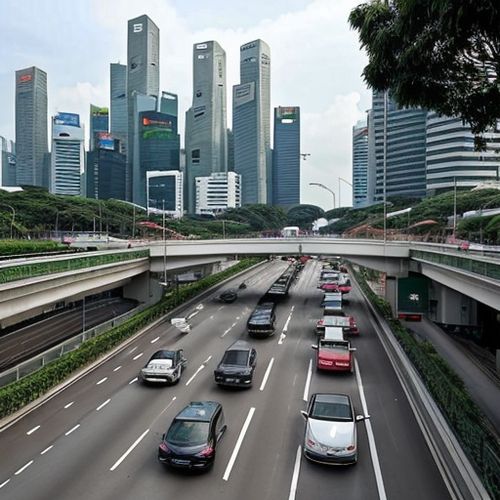
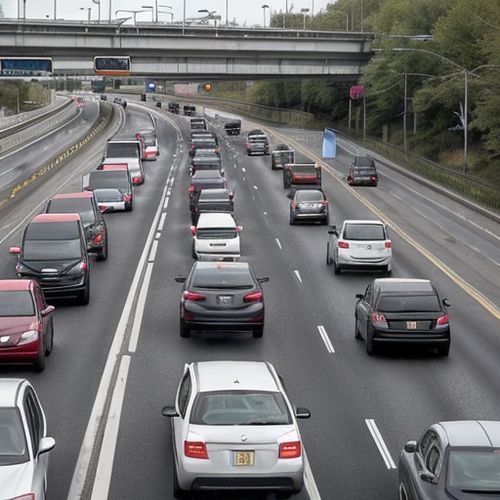
Singapore has long been recognized as a global leader in urban transportation management, and its latest adjustments to the Electronic Road Pricing (ERP) system have once again placed the city-state at the forefront of congestion control strategies. The dynamic pricing mechanism, which now sees peak-hour rates soaring to 300% higher than off-peak charges, is reshaping how commuters navigate the city’s roads. This bold move underscores Singapore’s commitment to reducing traffic congestion while encouraging the use of public transport.
The ERP system, introduced in 1998, has evolved into a finely tuned instrument for managing road usage. By leveraging real-time data and adaptive pricing, authorities can adjust fees to reflect current traffic conditions. The recent hike during morning and evening rush hours—reaching up to S$15 at certain gantries—has sparked debates among drivers, policymakers, and urban planners. While some criticize the steep increase as a financial burden, others argue it’s a necessary step to combat gridlock in one of the world’s most densely populated cities.
The science behind Singapore’s congestion pricing is as meticulous as it is controversial. Transport analysts use a combination of historical data, live traffic feeds, and predictive modeling to determine fee adjustments. The goal is simple: to keep traffic flowing at optimal speeds, typically between 20 to 30 km/h on expressways and 10 to 20 km/h on arterial roads. When speeds drop below these thresholds, the system triggers price increases to discourage non-essential trips. This delicate balance between accessibility and sustainability is what makes Singapore’s approach unique.
Public reaction to the 300% differential has been mixed. For white-collar workers with flexible hours, the new structure provides an incentive to shift their commutes. "I now leave for work at 9:30 AM instead of 8:00 AM," shares financial analyst David Lim. "The ERP difference covers my extra coffee while helping me avoid the worst traffic." However, shift workers and those without schedule flexibility feel disproportionately affected. Bus driver Rosnah Ismail notes, "We can’t choose when to drive—these changes just mean less take-home pay."
What sets Singapore’s system apart from other global cities is its responsiveness. Unlike London’s flat-rate congestion charge or Stockholm’s fixed-time fees, ERP rates can change every 30 minutes based on actual conditions. This granularity allows for precise demand management but requires sophisticated infrastructure. Over 100 gantries equipped with sensors, cameras, and transponder readers form the backbone of the system, generating data that informs both immediate pricing decisions and long-term transport policies.
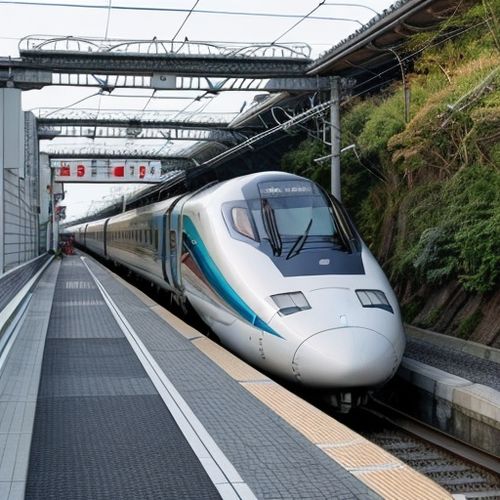
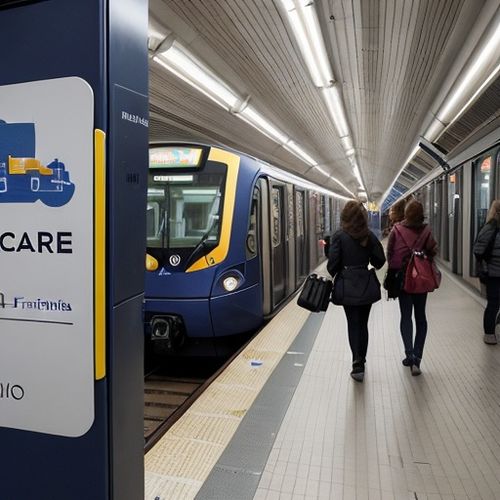
The environmental implications of the pricing overhaul are equally significant. Transport accounts for 14% of Singapore’s carbon emissions, and reducing idling vehicles aligns with the nation’s climate goals. Early data suggests the steeper peak pricing has decreased rush-hour car volumes by 8-12% since implementation, with corresponding increases in subway and bus ridership. This modal shift could accelerate Singapore’s progress toward its 2030 Green Plan targets, particularly in reducing land transport emissions by 20% from 2016 levels.
Critics, however, question whether the system adequately considers socioeconomic disparities. While ERP fees represent a minor inconvenience for high-income professionals, they impose real hardship on delivery drivers, tradespeople, and others whose livelihoods depend on road access. The government has responded with targeted rebates—up to S$150 monthly for commercial vehicles—but some argue these measures don’t go far enough. "The rebates cover maybe two weeks of ERP costs for us," says moving company owner Rajiv Patel. "We either absorb the loss or pass it to customers already struggling with inflation."
Looking ahead, Singapore’s Land Transport Authority (LTA) hints at even more sophisticated pricing models. Trials are underway for distance-based charging using GPS-enabled devices, which could replace physical gantries entirely. This next-generation system would allow for precise billing based on exact routes taken and real-time congestion levels. Such innovation could further refine the balance between mobility access and congestion prevention, potentially serving as a blueprint for other megacities grappling with traffic woes.
The 300% peak pricing differential represents more than just a policy tweak—it’s a statement about urban priorities. In choosing to aggressively price road access during high-demand periods, Singapore reaffirms its belief in market mechanisms over infrastructure expansion. As cities worldwide watch these developments, the broader question emerges: Can dynamic pricing alone solve urban congestion, or must it be part of a more comprehensive reimagining of how we design cities and lifestyles? For now, Singapore’s experiment continues, offering valuable lessons in the complex calculus of modern mobility.

By Christopher Harris/Apr 14, 2025

By William Miller/Apr 14, 2025
By Grace Cox/Apr 14, 2025

By James Moore/Apr 14, 2025

By Victoria Gonzalez/Apr 14, 2025
By Megan Clark/Apr 14, 2025

By Lily Simpson/Apr 14, 2025
By Eric Ward/Apr 14, 2025
By Elizabeth Taylor/Apr 14, 2025
By Thomas Roberts/Apr 14, 2025
By Emily Johnson/Apr 14, 2025

By Olivia Reed/Apr 14, 2025
By Sarah Davis/Apr 14, 2025
By Laura Wilson/Apr 14, 2025
By John Smith/Apr 14, 2025
By Emily Johnson/Apr 14, 2025
By Ryan Martin/Apr 14, 2025

By Sophia Lewis/Apr 14, 2025

By Samuel Cooper/Apr 14, 2025

By Sarah Davis/Apr 14, 2025