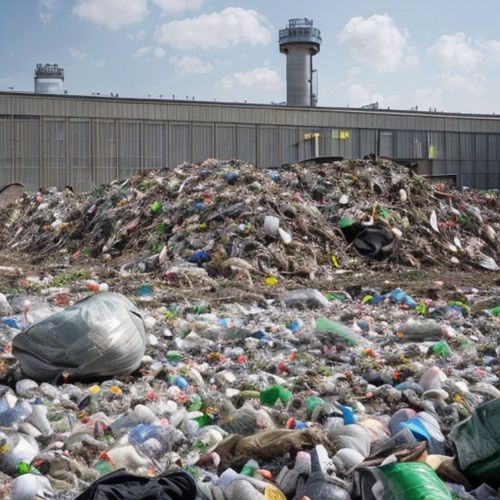
Germany is widely regarded as a global leader in waste management and recycling, with its meticulous approach to sorting household waste setting a benchmark for sustainability. The country’s waste separation system is not just a bureaucratic exercise but a cultural norm deeply ingrained in everyday life. Understanding the German waste classification standards can be both enlightening and overwhelming for newcomers, but it reflects a commitment to environmental responsibility that has yielded impressive results.
The foundation of Germany’s waste sorting system lies in its color-coded bins, each designated for specific types of waste. The most common categories include residual waste (Restmüll), paper and cardboard (Altpapier), packaging materials (Gelber Sack/Gelbe Tonne), organic waste (Bioabfall), and glass (Glas). Each of these streams is handled differently to maximize recycling efficiency and minimize landfill use. For instance, residual waste is typically incinerated for energy recovery, while organic waste is composted or converted into biogas.
One of the most distinctive features of the German system is the Gelber Sack or yellow bin, reserved for lightweight packaging such as plastic wrappers, metal cans, and composite materials. This system operates under the "Green Dot" scheme, where manufacturers pay a fee to fund the collection and recycling of their packaging. The success of this model has inspired similar programs across Europe, though Germany remains the most rigorous in its enforcement and public participation.
Glass recycling in Germany is another area where precision matters. Unlike many countries where glass is tossed into a single container, Germans separate glass by color—white (clear), brown, and green—into dedicated street-side bins. This separation occurs at the source to avoid contamination, ensuring higher-quality recycled glass. Some municipalities even schedule specific days for glass disposal to prevent noise pollution, as the clinking of bottles can disturb residents in quiet neighborhoods.
Organic waste, or Bioabfall, is another critical component of the system. Households are encouraged to compost food scraps, garden waste, and other biodegradable materials either at home or through municipal collection. The resulting compost is used in agriculture, closing the nutrient loop and reducing reliance on chemical fertilizers. However, strict rules govern what can go into the organic bin—no meat, dairy, or oily foods are allowed, as they can attract pests or disrupt the composting process.
Paper and cardboard recycling is equally systematic, with blue bins designated for these materials. Germans are adept at flattening cardboard boxes and removing non-paper components like plastic windows from envelopes. The high recovery rate of paper products has made Germany a leader in paper recycling, with much of the collected material reprocessed into new products. This not only conserves trees but also reduces water and energy consumption compared to virgin paper production.
Hazardous waste, such as batteries, electronics, and chemicals, requires special handling and is never included in regular household bins. Instead, residents must take these items to designated collection points or Recyclinghof (recycling centers). The same applies to bulky waste like furniture or appliances, which are either picked up on scheduled dates or dropped off at specific facilities. This careful segregation prevents toxic substances from entering landfills or incinerators, protecting both human health and the environment.
Public awareness and education play a pivotal role in the success of Germany’s waste management system. From an early age, children learn about recycling through school programs and community initiatives. Adults, meanwhile, face fines for incorrect sorting, though peer pressure and social norms are often more effective deterrents. The sense of collective responsibility is palpable, with neighbors occasionally correcting each other’s mistakes in a well-intentioned, if sometimes overly zealous, manner.
Critics argue that the system can be overly complex, with rules varying by municipality and frequent updates to waste categories. For example, some cities accept coffee pods in the yellow bin, while others do not. Yet, this flexibility allows local governments to tailor waste management to their infrastructure and priorities. The federal government also provides guidelines and funding to ensure consistency across regions, balancing local autonomy with national standards.
The results speak for themselves: Germany recycles over 65% of its municipal waste, far exceeding the European Union average. Landfills are nearly obsolete, with less than 1% of untreated waste ending up in them. The circular economy principles embedded in the waste sorting system have also spurred innovation, creating jobs in recycling technologies and sustainable product design. It’s a testament to how policy, technology, and civic engagement can align to address environmental challenges.
For foreigners living in Germany, adapting to the waste sorting system can be a steep learning curve. Expat forums are filled with anecdotes of confusion over whether pizza boxes belong in paper or organic waste (answer: grease-stained parts go in residual waste, clean parts in paper). Yet, most eventually embrace the system, appreciating its logic and environmental benefits. The German approach proves that sustainability is not just about infrastructure but also about fostering a culture of mindfulness and accountability.
Looking ahead, Germany continues to refine its waste management strategies, exploring ways to reduce single-use plastics and improve recycling technologies. The country’s experience offers valuable lessons for other nations striving to balance economic growth with ecological preservation. While no system is perfect, Germany’s commitment to continuous improvement and public participation sets a high standard for the world to follow.

By Christopher Harris/Apr 14, 2025
By William Miller/Apr 14, 2025
By Grace Cox/Apr 14, 2025

By James Moore/Apr 14, 2025

By Victoria Gonzalez/Apr 14, 2025
By Megan Clark/Apr 14, 2025
By Lily Simpson/Apr 14, 2025

By Eric Ward/Apr 14, 2025

By Elizabeth Taylor/Apr 14, 2025

By Thomas Roberts/Apr 14, 2025

By Emily Johnson/Apr 14, 2025

By Olivia Reed/Apr 14, 2025
By Sarah Davis/Apr 14, 2025
By Laura Wilson/Apr 14, 2025
By John Smith/Apr 14, 2025

By Emily Johnson/Apr 14, 2025

By Ryan Martin/Apr 14, 2025
By Sophia Lewis/Apr 14, 2025
By Samuel Cooper/Apr 14, 2025
By Sarah Davis/Apr 14, 2025