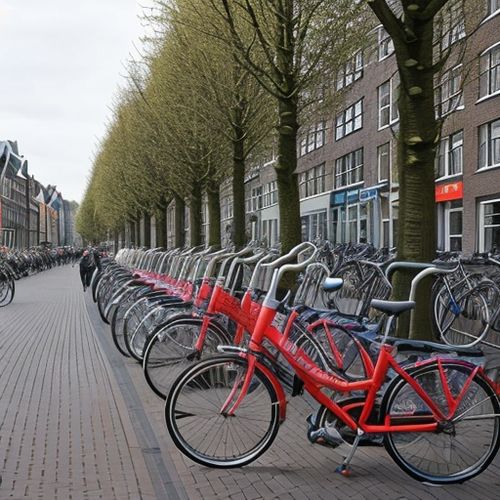
The Netherlands, often hailed as the cycling capital of the world, has long been a pioneer in promoting sustainable urban mobility. Among its many innovations, the Dutch approach to bicycle parking stands out as a model of efficiency and practicality. With millions of cyclists traversing the country daily, the need for secure and accessible bicycle parking solutions has become a cornerstone of urban planning. The Dutch have mastered the art of integrating bicycle storage into the fabric of their cities, ensuring that cycling remains a convenient and attractive option for commuters, families, and tourists alike.
One of the most remarkable aspects of the Dutch bicycle parking system is its emphasis on family-friendly solutions. Unlike many countries where cycling infrastructure primarily caters to individual riders, the Netherlands has developed parking facilities that accommodate families with children. This includes designated spaces for cargo bikes, which are increasingly popular among parents transporting kids to school or running errands. These specialized parking areas are often wider than standard spots and located near key amenities such as schools, playgrounds, and shopping centers.
The concept of bicycle parking in the Netherlands goes far beyond simple racks or stands. In major cities like Amsterdam and Utrecht, multi-story bicycle parking garages have become a common sight. These facilities, often located near train stations or busy urban centers, can hold thousands of bicycles at once. What makes them particularly family-friendly is their thoughtful design - with features like wide aisles for maneuvering bulky cargo bikes, lower racks for children's bicycles, and even dedicated areas for bike trailers. Some facilities even offer repair stations and air pumps, recognizing that families with young cyclists often need these services.
At the neighborhood level, Dutch residential areas showcase another innovative approach to bicycle storage. Many apartment buildings now incorporate ground-floor bicycle parking rooms with secure access, solving the problem of where to keep multiple family bikes overnight. These spaces typically include different zones for various bicycle types - from standard city bikes to children's bikes and even balance bikes for toddlers. The Dutch understanding that a family might own several bicycles of different sizes has led to these nuanced storage solutions that prevent clutter while keeping all bikes accessible.
Perhaps the most impressive family-oriented bicycle parking solutions can be found at Dutch schools. It's common to see expansive bicycle parking areas at educational institutions, designed specifically to handle the morning and afternoon rush of students arriving by bike. These areas often feature color-coded sections for different age groups, making it easier for children to find and remember where they parked. The parking layouts prioritize safety, with clear pathways that prevent congestion and reduce the risk of accidents as children walk their bikes in and out.
The Dutch approach to bicycle parking extends beyond physical infrastructure to include behavioral aspects as well. From a young age, children are taught proper bicycle parking etiquette as part of their cycling education. This includes lessons on how to lock bikes securely, park them neatly without obstructing others, and respect designated parking areas. Such cultural norms ensure that even massive bicycle parking facilities remain organized and functional, despite the high volume of users.
Innovation in bicycle parking technology has also played a role in serving Dutch families. Some cities have implemented smart parking systems where sensors indicate available spaces, saving parents with cargo bikes the frustration of circling full parking areas. There are also experimental projects with underground parking systems and automated bicycle storage, though these tend to be more common in high-density business districts than residential areas.
The success of the Dutch bicycle parking model lies in its holistic approach. It's not just about providing spaces to leave bikes; it's about creating an entire ecosystem that makes cycling practical for every family member. This includes seamless connections between parking facilities and other transportation modes, clear signage in multiple languages for tourists, and maintenance services that keep the facilities clean and functional year-round.
As other nations look to increase cycling rates among families, the Dutch parking solutions offer valuable lessons. The key takeaway is that encouraging family cycling requires more than just safe bike lanes - it demands equally thoughtful solutions for where those bikes will be stored at home, at school, and at every destination in between. The Netherlands demonstrates that when bicycle parking is convenient, secure, and designed with real user needs in mind, it becomes a powerful enabler of sustainable transportation habits that can last generations.

By Christopher Harris/Apr 14, 2025
By William Miller/Apr 14, 2025
By Grace Cox/Apr 14, 2025

By James Moore/Apr 14, 2025

By Victoria Gonzalez/Apr 14, 2025

By Megan Clark/Apr 14, 2025
By Lily Simpson/Apr 14, 2025
By Eric Ward/Apr 14, 2025
By Elizabeth Taylor/Apr 14, 2025

By Thomas Roberts/Apr 14, 2025
By Emily Johnson/Apr 14, 2025
By Olivia Reed/Apr 14, 2025
By Sarah Davis/Apr 14, 2025
By Laura Wilson/Apr 14, 2025
By John Smith/Apr 14, 2025
By Emily Johnson/Apr 14, 2025

By Ryan Martin/Apr 14, 2025

By Sophia Lewis/Apr 14, 2025

By Samuel Cooper/Apr 14, 2025

By Sarah Davis/Apr 14, 2025