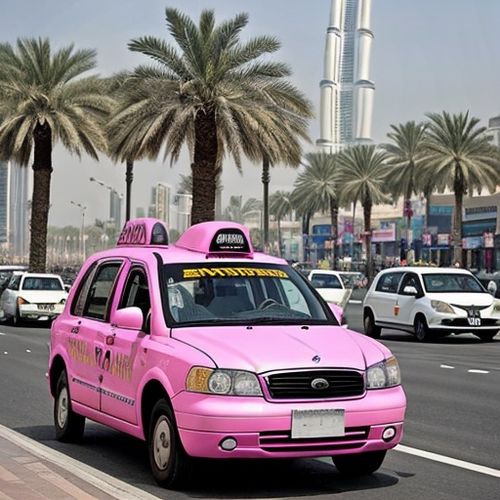
In the bustling city of Dubai, where innovation meets tradition in a dazzling display of modernity, even the taxis tell a story. Among the sea of vehicles navigating the wide, palm-lined boulevards, one color stands out—pink. These aren’t just any taxis; they’re part of a unique initiative by the Dubai Roads and Transport Authority (RTA) to empower women and offer them safer transportation options. The pink taxis, driven exclusively by female drivers, have become a symbol of progress in a region often scrutinized for its gender dynamics.
The concept of gender-specific taxis isn’t entirely new, but Dubai’s approach is distinct in its visibility and intent. Introduced in 2007, the pink taxi service was designed to cater to women, children, and families who might prefer a female driver for cultural, religious, or personal reasons. The bright pink hue makes them instantly recognizable, a deliberate choice to signal their purpose. Unlike other cities where similar services might operate discreetly, Dubai’s pink taxis are proudly marked, reflecting the emirate’s confidence in its commitment to women’s autonomy.
For many female passengers, the pink taxis are more than just a convenience—they’re a reassurance. In a survey conducted by the RTA, women cited comfort and safety as the primary reasons for choosing these cabs. The drivers, all rigorously trained and licensed, often share stories of passengers expressing relief, particularly at night or when traveling alone. One driver, Aisha Al-Mansoori, recalled a young woman who tearfully thanked her after a late-night ride home, saying she’d previously avoided taxis altogether. "That’s when I realized this isn’t just a job," Aisha said. "We’re changing how women move through the city."
The service has also created economic opportunities for women in a sector traditionally dominated by men. To qualify as a pink taxi driver, applicants must meet stringent requirements, including clean driving records and fluency in English. The RTA provides specialized training, covering everything from defensive driving to customer service tailored for female passengers. For drivers like Fatima Al-Hashimi, a single mother supporting two children, the job has been transformative. "It’s not just about income," she explained. "It’s about showing my daughters what’s possible."
Critics, however, argue that the pink taxis perpetuate gender segregation rather than challenge it. Some question whether the service reinforces the idea that women need "protection" in public spaces instead of addressing broader societal issues like harassment. Others point out that the taxis are rarely used by men, even when they’re the only available option, suggesting lingering cultural stigmas. In response, the RTA emphasizes that the program is optional, designed to provide choice rather than impose separation. "This isn’t about limiting women," said an RTA spokesperson. "It’s about expanding their options."
Beyond practicality, the pink taxis have become a cultural talking point. Tourists often snap photos of them, and they’ve been featured in travel blogs as a quintessential Dubai experience. For locals, they’re a visible reminder of the city’s evolving identity—a place where tradition and progress coexist. As Dubai continues to grow, initiatives like the pink taxi service offer a glimpse into how urban spaces can adapt to diverse needs while sparking conversations about gender, mobility, and what it means to feel safe in a city.
The future of the pink taxis remains unwritten. Some speculate about expanding the fleet or introducing new features like child seats for working mothers. Others wonder if the service will eventually become obsolete as societal norms shift. For now, though, these rosy-hued vehicles continue to cruise Dubai’s streets, a vivid testament to the city’s willingness to experiment—and to listen to the women who call it home.

By Christopher Harris/Apr 14, 2025

By William Miller/Apr 14, 2025
By Grace Cox/Apr 14, 2025

By James Moore/Apr 14, 2025

By Victoria Gonzalez/Apr 14, 2025

By Megan Clark/Apr 14, 2025

By Lily Simpson/Apr 14, 2025

By Eric Ward/Apr 14, 2025
By Elizabeth Taylor/Apr 14, 2025

By Thomas Roberts/Apr 14, 2025

By Emily Johnson/Apr 14, 2025

By Olivia Reed/Apr 14, 2025
By Sarah Davis/Apr 14, 2025
By Laura Wilson/Apr 14, 2025
By John Smith/Apr 14, 2025

By Emily Johnson/Apr 14, 2025

By Ryan Martin/Apr 14, 2025

By Sophia Lewis/Apr 14, 2025

By Samuel Cooper/Apr 14, 2025

By Sarah Davis/Apr 14, 2025