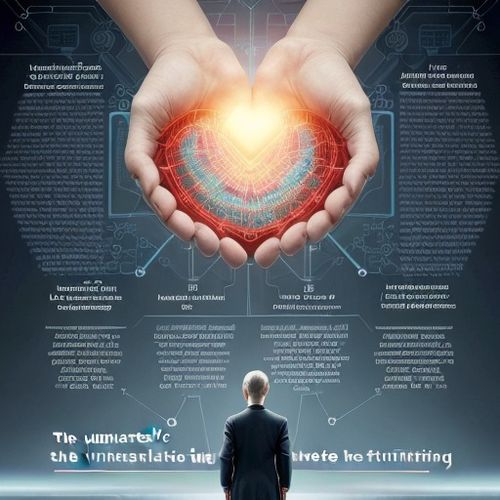
The concept of human-machine collaboration has evolved from science fiction to an everyday reality. What once seemed like a distant future—where humans and machines work side by side—is now unfolding across industries, reshaping how we live, work, and innovate. This partnership is not about machines replacing humans but augmenting our capabilities, allowing us to achieve what was previously unimaginable.
The Rise of Collaborative Intelligence
At the heart of human-machine collaboration lies the idea of collaborative intelligence. Unlike traditional automation, where machines perform tasks independently, collaborative intelligence emphasizes synergy. Machines handle data processing, pattern recognition, and repetitive tasks with precision, while humans contribute creativity, emotional intelligence, and ethical judgment. Together, they form a dynamic duo capable of solving complex problems.
Take healthcare as an example. AI-powered diagnostic tools analyze medical images faster and more accurately than ever before. However, it’s the doctor who interprets these results in the context of a patient’s history, lifestyle, and emotional state. The machine provides insights; the human provides care. This balance is where the true power of collaboration shines.
Breaking Down Barriers in the Workplace
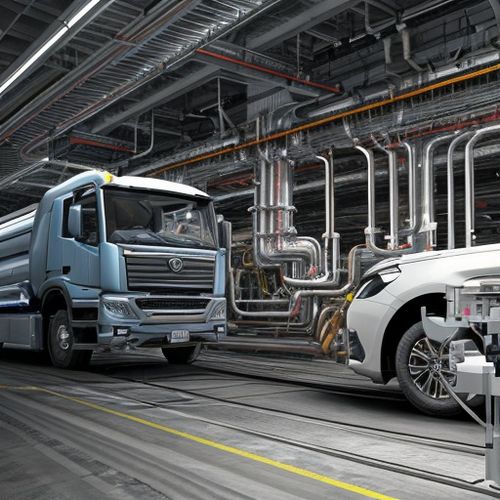
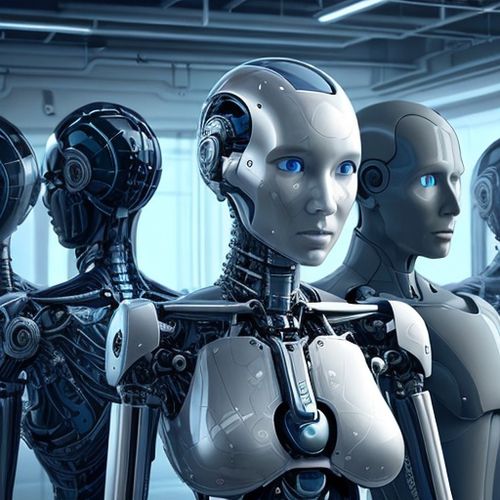
The workplace has become a testing ground for human-machine partnerships. In manufacturing, cobots (collaborative robots) work alongside factory workers, taking over dangerous or monotonous tasks. These robots don’t just increase efficiency—they reduce workplace injuries and free up human workers to focus on quality control and innovation.
In creative fields, the collaboration takes a different form. AI tools assist designers by generating hundreds of logo variations in minutes, but the final selection and refinement remain distinctly human endeavors. Writers use AI to overcome writer’s block or fact-check in real time, yet the storytelling—the soul of the work—stays firmly in human hands.
The Learning Loop: How Humans and Machines Teach Each Other
One of the most fascinating aspects of this collaboration is the bidirectional learning process. Machine learning algorithms improve through human feedback, while humans develop new skills by working alongside intelligent systems. This creates a virtuous cycle where both parties grow more capable over time.
Consider language translation tools. They learn from human corrections, becoming more nuanced with each interaction. Simultaneously, human translators who work with these tools develop tech-savvy skills that make them more versatile professionals. It’s not a zero-sum game but a continuous exchange of knowledge.
Ethical Considerations in the Age of Collaboration
As with any transformative technology, human-machine collaboration brings ethical challenges. Questions about data privacy, algorithmic bias, and job displacement require careful consideration. The solution isn’t to resist progress but to guide it responsibly. This means establishing clear frameworks where machines enhance human decision-making without undermining human agency.
Transparency becomes crucial in this context. When AI systems make recommendations, humans need to understand how those conclusions were reached. Similarly, there must always be a human in the loop for critical decisions, especially in fields like criminal justice or healthcare where lives are at stake.
The Future: Beyond Cooperation to Co-Creation
Looking ahead, the most exciting developments may come from co-creation—situations where humans and machines jointly create something neither could achieve alone. We’re already seeing glimpses of this in scientific research, where AI analyzes massive datasets to identify promising research directions that humans then explore.
In art, we see AI generating novel musical compositions or visual styles that human artists refine and contextualize. These partnerships push the boundaries of what’s possible, creating hybrid works that blend computational precision with human expression. The results often surprise both the creators and the audiences.
The journey of human-machine collaboration is just beginning. As technology continues to advance, these partnerships will become more seamless and intuitive. The goal isn’t to create machines that think like humans, but to develop systems that complement human thinking. In doing so, we’re not just building smarter tools—we’re expanding the very definition of human potential.
By Thomas Roberts/Apr 19, 2025

By Amanda Phillips/Apr 19, 2025
By Daniel Scott/Apr 19, 2025

By Christopher Harris/Apr 19, 2025

By David Anderson/Apr 19, 2025
By Amanda Phillips/Apr 19, 2025

By Ryan Martin/Apr 19, 2025
By Jessica Lee/Apr 19, 2025
By Eric Ward/Apr 19, 2025

By Megan Clark/Apr 19, 2025
By Michael Brown/Apr 19, 2025
By Jessica Lee/Apr 19, 2025

By Laura Wilson/Apr 19, 2025

By Jessica Lee/Apr 19, 2025

By Emma Thompson/Apr 19, 2025

By Elizabeth Taylor/Apr 19, 2025
By Jessica Lee/Apr 19, 2025
By Elizabeth Taylor/Apr 19, 2025
By Lily Simpson/Apr 19, 2025
By Michael Brown/Apr 19, 2025